Vertical integration or focusing core competencies for superfunds
What Australians consider as their superannuation fund is usually actually an amalgamation of services. Most superannuation funds outsource key functions to third-party service providers, in theory so as to focus on their core competencies.
However companies like Netflix, Apple and SpaceX have demonstrated the advantages of vertical integration; and why narrowly focusing on core competencies may not be in the best interest of a company of its customers.
Let’s explore which school of thought would best suit the superannuation industry.
Super funds currently focus on their core competencies
In a typical superannuation ecosystem, multiple providers operate along the value chain. Accountability is shared across the following service providers:
| Function | Providers & examples | Terminology | Integration candidate |
|---|---|---|---|
| Core fund entity | AustralianSuper, Hostplus, UniSuper | Fund trustee | Already core |
| Customer (fund member) support and comms | Mercer, MUFG (acquired Link Group in 2024), | Administration | Yes |
| Invest funds, manage trades | BlackRock, IFM, Vanguard | Investment management | Yes |
| Life insurance, disability cover | TAL, MetLife | Insurance | Maybe |
| Manage holdings ownership, trade settlements | J.P. Morgan, State Street | Custody | Maybe |
| Financial advice | Internal or external advisers | Financial advice | Maybe |
| Payment and data rails | Bravura ePASS, Iress SuperConnector | Superstream gateways & clearing houses | No |
Each layer affects the member experience differently. Fragmented service delivery can create friction: such as inconsistent communication or delays between payroll contribution and balance updates. Conversely, when integration and data-sharing are strong, members experience smoother onboarding, transparent transactions, and cohesive engagement across touchpoints.
What could vertical integration look like
Let’s consider some of the examples noted at the start and what makes them vertically integrated.
| Company | Vertical Integration | Pros / Cons |
|---|---|---|
| Netflix | Produces its own content (Netflix Studios), owns distribution platform, manages data/streaming infrastructure. | Pros: Control over content library, reduced reliance on studios, data-driven production, global reach. Cons: High production costs, hit-driven risk, increasing competition, pressure to maintain subscriber growth. |
| Apple | Designs hardware, software (iOS/macOS), chips (Apple Silicon), services, and controls retail + supply chain partners. | Pros: Tight ecosystem integration, performance optimization, strong brand, high margins, supply-chain resilience. Cons: High manufacturing/operations complexity, dependency on key suppliers, regulatory scrutiny, high R&D costs. |
| SpaceX | Builds rockets, engines, satellites, launch infrastructure, and operates Starlink. Prefers in-house manufacturing. | Pros: Lower launch costs, rapid innovation, quality control, reduced supplier bottlenecks, faster iteration. Cons: Very capital-intensive, high engineering risk, massive operational scale needed, reliance on continuous funding. |
Applied to superannuation, vertical integration would mean a single entity controlled the key functions we noted earlier: trusteeship, managing investments, member support and communications.
The effort to vertically integrate would take capital, may distract focus, and result in additional administrative overhead; however, done right, the benefits would be improved speed, consistency, and control.
Closing thoughts
Fewer super funds now dominate the landscape, concentrating pricing power across a smaller set of players.
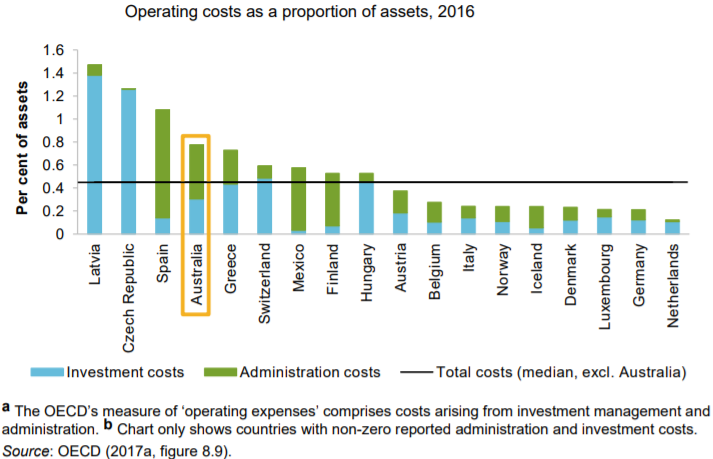
APRA has pushed consolidation on the basis that larger funds can deliver better member outcomes through scale. This is arguable, as outlined by Morningstar.
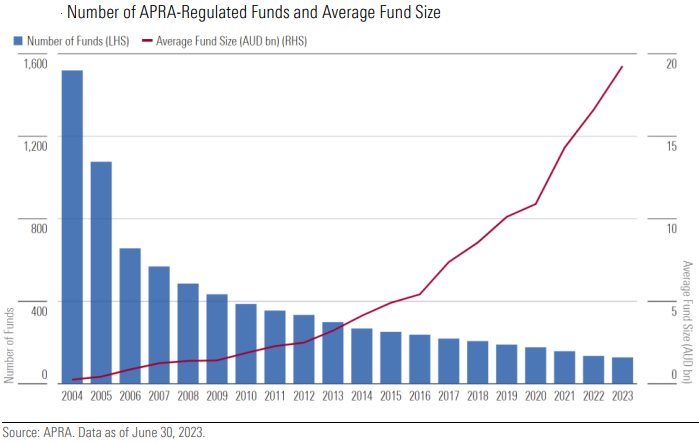
Growth-minded funds who have conviction in their own distinctive offering may benefit from strategic vertical integration plays. This will allow them to stay independent while enabling more superfund options for members to choose from.
This post was created with a little (a lot) of help from ChatGPT